Day Trading Risk Management for Beginners
Day trading risk management is one of the most important skills a beginner can learn. Many new traders focus first on entries, indicators, strategies, and profit targets. Those things matter, but they should never come before protecting your trading capital.
This page is for educational purposes only. It is not financial advice, a trade recommendation, or a promise of results. Day trading involves real financial risk, and beginners should practice in a simulated environment before risking live money.
Why Day Trading Risk Management for Beginners Matters
Day trading moves fast. Prices can change quickly, emotions can rise, and one poorly managed trade can damage an account. That is why beginners need simple rules before they enter a trade.
Risk management helps you answer important questions before the trade begins:
How much am I willing to lose on this trade?
Where is my stop loss?
How large should my position be?
Is this trade worth the risk?
Am I following my plan or reacting emotionally?
The goal is not to win every trade. No trader wins every trade. The goal is to keep losses controlled so one bad decision does not erase days or weeks of progress.
What Is Risk Management in Day Trading?
Risk management is the process of controlling your potential loss before entering a trade. Instead of only thinking about how much money you can make, you first decide how much money you are willing to risk.
For beginners, this is important because emotions can take over quickly. When a trade starts moving against you, it is easy to freeze, move your stop, add more size, or hope the market comes back. A risk plan helps remove some of that emotion.
A basic risk plan should include:
The amount you are willing to risk
Your entry area
Your stop loss area
Your position size
Your profit target
Your reason for taking the trade
If those things are not clear before entry, the trade may not be ready.
The 1% Rule for Beginner Traders
One common risk management idea is the 1% rule. This means risking no more than 1% of your trading account on a single trade.
For example:
A $1,000 account risking 1% = $10 risk per trade
A $5,000 account risking 1% = $50 risk per trade
A $10,000 account risking 1% = $100 risk per trade
Some beginners may choose to risk even less than 1%, especially while learning. The point is not the exact number. The point is to keep risk small enough that one trade does not cause major damage.
This rule also helps beginners avoid emotional trading. When the risk is too large, every candle feels stressful. When the risk is planned and controlled, it becomes easier to follow the process.
Why Stop Losses Matter
A stop-loss is an order or a planned exit area that helps limit losses if the price moves against your trade. Investor.gov explains that a stop order becomes active once the price reaches a specified stop price.
A stop loss does not guarantee a perfect exit in every market condition, but it does help create a defined risk plan. Without a stop loss, a small trade idea can turn into a large loss.
Beginners should avoid entering trades without knowing where they are wrong. If the trade setup is no longer valid, the stop loss is the line that helps protect the account.
A simple way to think about it is:
Entry = where the trade starts
Stop loss = where the trade idea is wrong
Target = where profit may be taken if the trade works
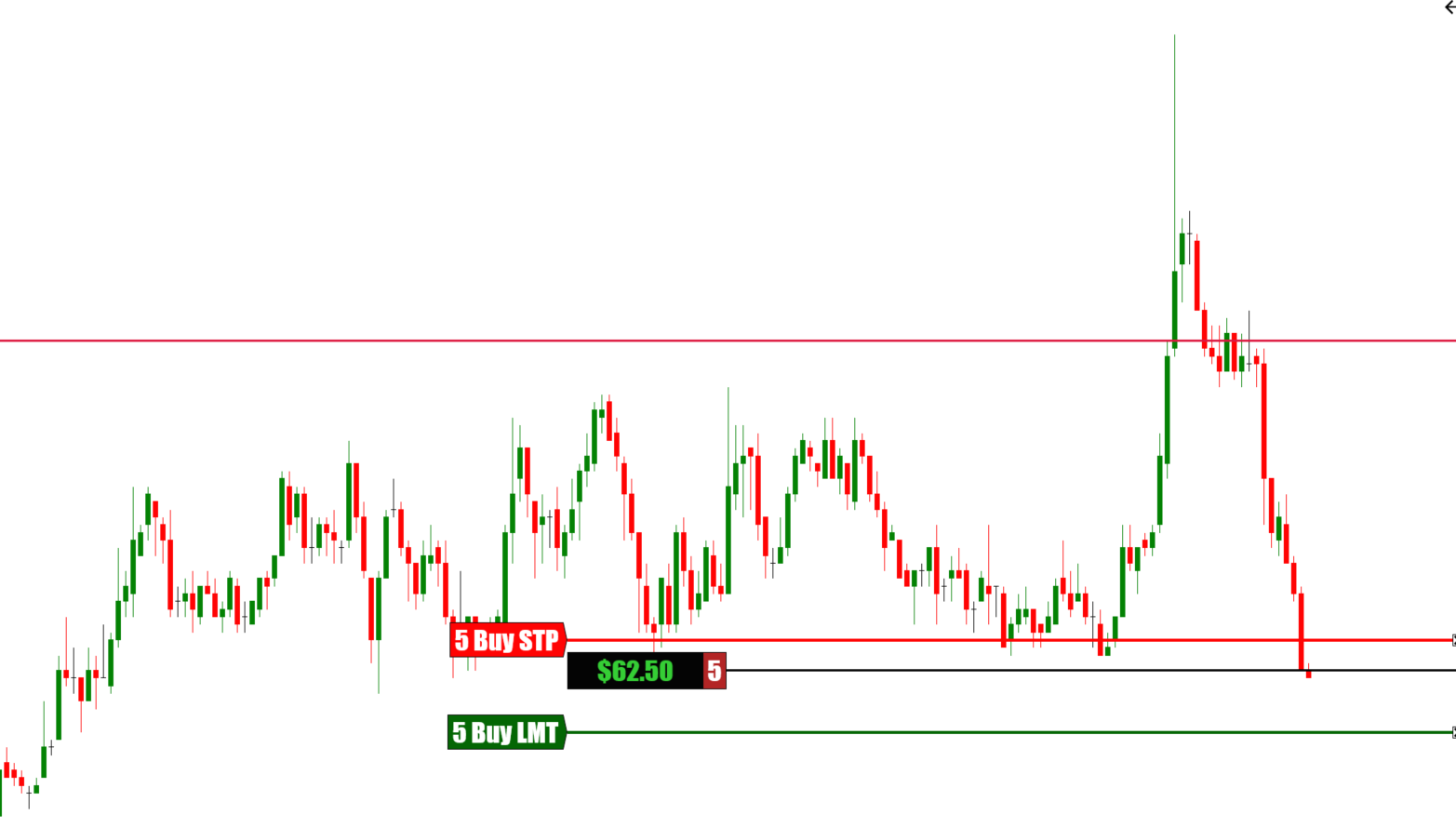 Example of a real price chart showing proper risk management with entry, stop loss, and profit target.
Position Sizing and Contract Size
Position sizing means deciding how many shares, contracts, or units to trade. This is where many beginners get into trouble.
A setup may look good, but if the position size is too large, the emotional pressure becomes too high. The trader may exit too early, hold too long, or ignore the plan completely.
For futures traders, this is especially important because contracts can move quickly. The CFTC warns that futures and options trading can be volatile, complex, and risky, and that losses can be substantial.
Beginners should understand the value of each tick or point before entering a trade. For example, one market may move more slowly but have a larger dollar value per point, while another market may move faster with greater volatility.
Before taking a trade, a beginner should know:
The dollar value per point or tick
The stop size
The total dollar risk
The number of contracts
The account size
The maximum daily loss limit
If those numbers are unclear, the trade should wait.
Risk-to-Reward Ratio Explained
Risk-to-reward compares how much you are risking to how much you are trying to make.
For example, if you risk $50 to try to make $100, that is a 1:2 risk-to-reward ratio.
A beginner does not need a perfect ratio on every trade, but the trade should make sense. If you are risking $100 to make $20, the trade may not be worth it unless there is a very specific reason.
A simple beginner approach is to look for trades where the potential reward is at least equal to or greater than the risk. This helps prevent small wins from being erased by one large loss.
Common Risk Management Mistakes Beginners Make
Many beginners struggle because they do not lose small. They allow emotions to turn manageable losses into account-damaging losses.
Common mistakes include:
Trading too large
Moving the stop loss farther away
Taking too many trades in one session
Trying to win back losses immediately
Entering without a clear plan
Ignoring daily loss limits
Focusing only on profit targets
Copying another trader without understanding the risk
The market will always create another opportunity. Protecting your capital gives you the chance to keep learning.
Simple Beginner Risk Management Checklist
Before entering a trade, ask:
Do I know my entry?
Do I know my stop loss?
Do I know my target?
Do I know my dollar risk?
Is my position size reasonable?
Am I following my plan?
Am I calm enough to take this trade?
Have I already hit my daily loss limit?
Does this trade fit my strategy?
If the answer is no to any important question, it may be better to wait.
Final Thoughts
Day trading risk management is not exciting, but it is necessary. Strategies can help you find opportunities, but risk management helps you stay in the game long enough to learn.
Day trading risk management for beginners should stay simple: define your risk, use a stop loss, choose the right position size, and avoid taking trades that do not fit your plan.
For beginners, the goal should not be fast money. The goal should be discipline, patience, and controlled decision-making.
Start small. Practice in simulation. Keep a journal. Review your mistakes. Focus on protecting your capital before trying to grow it.
Next Step: Learn Paper Trading for Beginners
Before risking real money, beginners should practice in a simulated trading environment. Paper trading can help you test strategies, build discipline, and understand risk without putting live capital on the line.