Day Trading Strategies for Beginners
If you’re just getting started, learning the right day trading strategies for beginners can make the difference between frustration and consistency. Instead of chasing random setups, beginners should focus on simple, repeatable strategies that work in real market conditions.
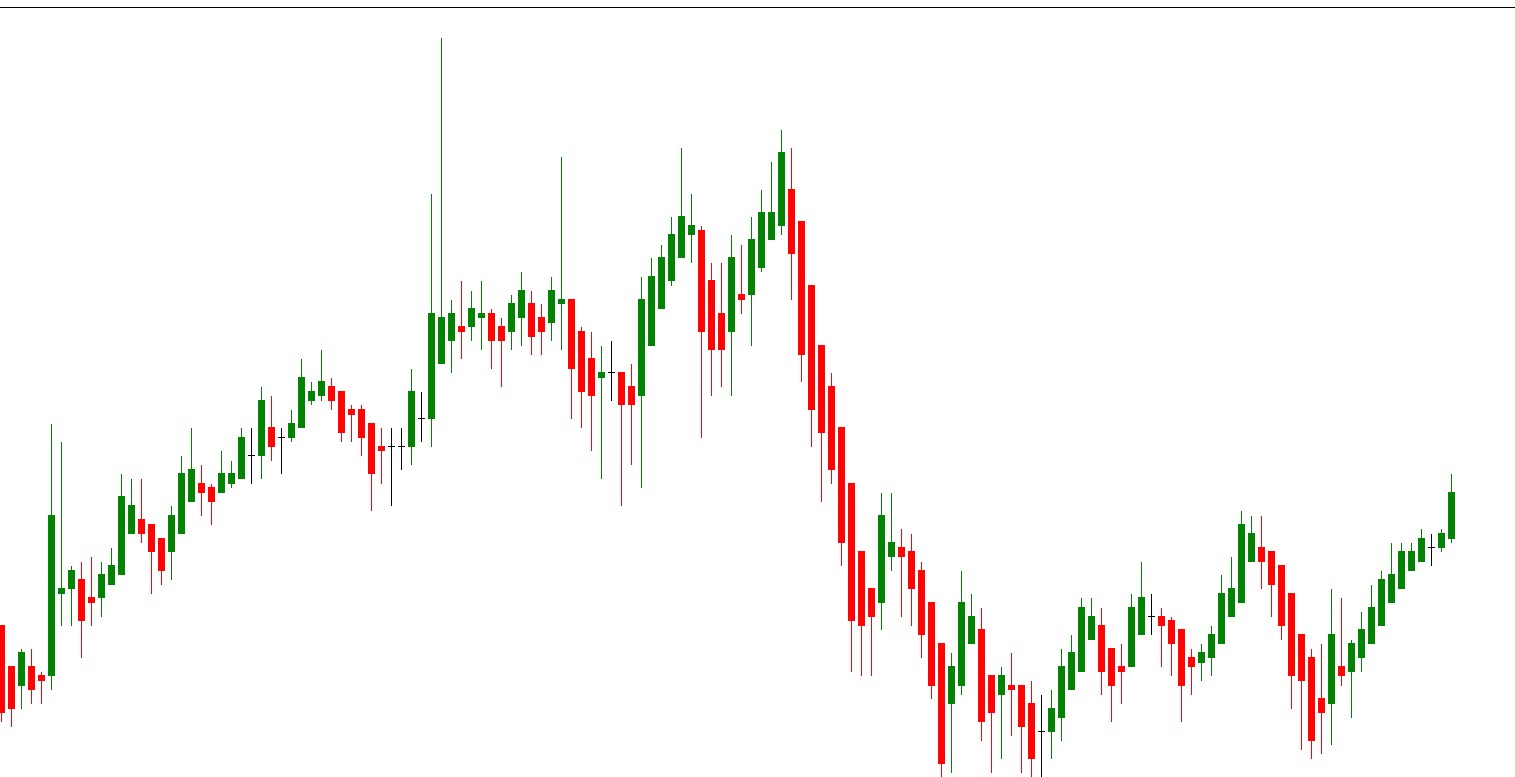 Example of a real price chart showing trend, pullbacks, and breakout opportunities in day trading strategies for beginners.
This type of price movement is what traders look for when applying day trading strategies for beginners, helping them identify trends, time pullbacks, and enter breakout trades with confidence. Learning to recognize these patterns is the foundation of becoming a consistent day trader.
Best Day Trading Strategies for Beginners
There are many different approaches to trading, but the best day trading strategies for beginners are simple, structured, and easy to repeat. The goal is not to learn everything at once, but to focus on a few reliable setups and build consistency over time.
Trend Following Strategy
The trend following strategy involves trading in the direction of the overall market movement. Instead of trying to predict reversals, traders wait for confirmation and enter trades that align with the current trend. This is one of the most reliable day trading strategies for beginners because it reduces guesswork and keeps you trading with momentum.
Pullback Strategy
The pullback strategy focuses on entering trades when price temporarily moves against the trend before continuing in its original direction. Many beginners use moving averages, such as the 9 or 34 EMA, to identify these pullbacks. This is considered one of the best day trading strategies for beginners because it provides clear entry points and defined risk.
Breakout Strategy
The breakout strategy involves entering a trade when price moves above resistance or below support with strong momentum. Breakouts can lead to fast price movements, but beginners should wait for confirmation to avoid false signals.
How to Choose the Right Strategy
Choosing the right strategy depends on your personality, time availability, and risk tolerance. Some traders prefer fast-paced breakout trades, while others prefer the patience of pullback setups. The key is to choose one approach and focus on mastering it instead of jumping between strategies.
When to Use Each Strategy
Day trading strategies for beginners work best when traders understand when each setup fits the market. A trend following strategy works best when the market is moving clearly in one direction and momentum is strong. In these conditions, traders can use pullbacks or continuation entries to trade with the trend instead of fighting it.
A pullback strategy is most useful when price is trending but temporarily retraces to an important area such as a moving average, prior support or resistance, or a key intraday level. This gives beginners a more controlled way to enter instead of chasing price after a big move.
A breakout strategy works best when price has been consolidating in a tight range and then breaks above resistance or below support with strength. Beginners should be careful with breakouts because false breakouts are common. Waiting for confirmation can help improve consistency.
Learning when to use each setup is just as important as learning the setup itself. The best day trading strategies for beginners are not just about entries. They are about context, patience, and discipline.
How to Practice Day Trading Strategies Safely
Before risking real money, beginners should practice day trading strategies in a safe and structured way. One of the best ways to do this is through paper trading or simulated trading. This allows traders to test strategies, build confidence, and learn how price moves without exposing their capital to unnecessary risk.
It also helps to focus on one setup at a time. Instead of trying to learn everything at once, beginners should choose one strategy, track it, and review the results. Keeping a trading journal can help identify what is working, what is not, and where discipline needs improvement.
Another important part of practice is risk control. Even in simulation, traders should use realistic position sizing, stop losses, and trade management rules. That way, when they move to live trading, they are practicing real habits instead of random clicking.
The goal is not to become perfect overnight. The goal is to build skill, consistency, and confidence over time.
Common Mistakes Beginners Make
Many beginners struggle because they switch strategies too often, overtrade, or ignore risk management. Consistency comes from following a clear plan, managing risk, and focusing on long-term improvement instead of short-term wins.
Final Thoughts
The best day trading strategies for beginners are simple, repeatable, and focused on consistency. Start with one strategy, manage your risk, and build confidence over time.
Over time, as you gain experience, you can begin refining your approach and adapting to different market conditions. The key is to stay disciplined, stick to your plan, and avoid the temptation to chase every move. The most successful traders are not the ones who know everything — they are the ones who execute consistently and manage risk effectively.
Next, learn how to manage your risk and protect your account with proper risk management.